

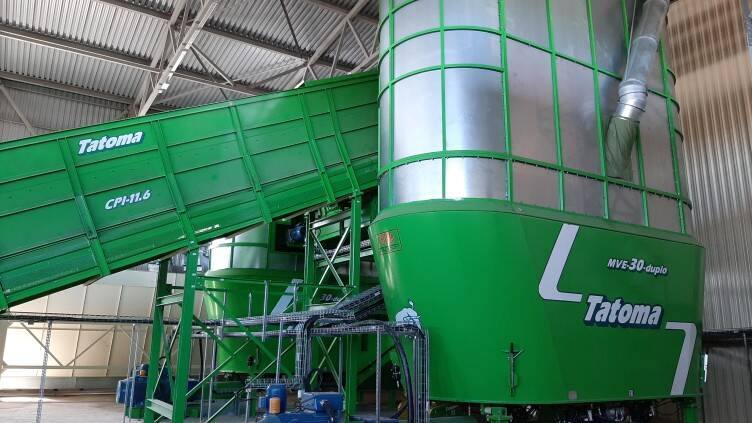
Over the last decade, cattle farming in technologically advanced regions—especially the United States and Northern Europe (the Netherlands, Denmark, Germany, and Sweden)—has increasingly adopted automated systems for managing animal feeding. This shift is part of a broader approach known as Precision Livestock Farming (PLF), where sensors, robotics, and digital tools help farmers improve animal nutrition, reduce operating costs, and make production systems more sustainable.
1. Development of automated feeding systems
In the past, preparing feed on cattle farms was usually done using mixer wagons, with feed distributed manually or with limited automation. From the mid-2010s onward, farms began adopting Automated Feeding Systems (AFS) more widely. These systems can automatically perform several steps in the feeding process, including storing ingredients, weighing them, mixing the ration, transporting it, and distributing the Total Mixed Ration (TMR) to the animals.
Most automated feeding systems include three main components:
- Storage and dosing units, such as automated silos and feed hoppers.
- Robotic mixing and delivery units, which move along rails or navigate independently through the barn.
- Digital management platforms that control feeding operations and connect with sensors that track feed intake and animal production.
At the same time, improvements in sensor technology and data analysis have made it possible to monitor animals’ feeding behavior. Motion sensors, RFID identification systems, and pressure or sound sensors can help estimate how much animals eat and identify potential health or production problems at an early stage.
2. Advances in diet formulation and feeding software
One of the most important developments in recent years has been the improvement of software used to design and manage animal diets. This software now plays a central role in automated feeding systems.
In the past, feed rations were usually calculated using fixed nutritional tables, such as NRC recommendations or similar national guidelines. Today, modern systems combine updated ingredient databases with more advanced models that allow farmers to adjust diets more precisely.
Current software platforms make it possible to:
- Optimize diets while considering several factors at the same time, such as cost, nutritional balance, digestibility, and potential environmental impact.
- Automatically adjust rations according to real-time production data, including milk yield, body weight, and feed intake.
- Connect directly with automated feeding equipment, sending instructions to the mixing and dosing units.
- Simulate feeding scenarios, allowing farmers to evaluate potential changes before applying them.
In highly automated farms, these nutrition programs are also linked to production sensors, robotic milking systems, and herd management software. This creates a digital environment where diets can be adjusted regularly based on the animals’ current production conditions.
3. Adoption trends in developed countries
The adoption of automation in cattle farming varies across regions. Northern Europe currently leads the implementation of these technologies, followed by North America. In many other parts of the world, automated feeding systems are still relatively uncommon.
Several indicators illustrate this trend:
- Europe represented about 35% of the global automated feeding systems market in 2024.
- The global market exceeded USD 6.7 billion in 2024 and is expected to reach around USD 14 billion by 2033, with annual growth rates above 8%.
- In the United States, livestock automation technologies are expanding rapidly, largely due to increasing farm digitalization and shortages of agricultural labor.
The faster adoption in Europe is partly explained by intensive production systems and public policies that promote environmental efficiency and animal welfare. In countries such as Denmark and Sweden, many dairy farms already operate with a high level of automation and integrated digital management.
In the United States, adoption has been somewhat slower, mainly because farms tend to be larger and production systems differ structurally.
4. Main benefits of automation
- Lower labor requirements Automation reduces the need for manual labor in repetitive tasks such as weighing, mixing, and distributing feed. This is particularly valuable in areas where agricultural labor is scarce.
- More consistent nutrition When advanced diet software is combined with automated dosing systems, feed rations can be prepared with greater consistency. More regular and precise feeding also helps maintain stable rumen conditions and reduces feed waste.
- Higher production efficiency Providing feed at regular intervals and in well-balanced rations supports stable metabolism in cattle. This can lead to higher milk production in dairy systems or improved daily weight gain in beef finishing operations.
Continuous access to production data also allows farmers to use analytical tools and artificial intelligence to improve feeding strategies.
- Better animal welfare Automated systems allow feed to be delivered more frequently and in line with animals’ natural feeding patterns. This reduces competition at the feed bunk. Individual monitoring also helps identify health issues earlier.
- Environmental benefits More precise nutritional management can reduce the excess of nutrients in the diet, which lowers nitrogen and phosphorus excretion. Improved feed efficiency also helps reduce the overall environmental impact of livestock production.
5. Future outlook
Current technological trends point toward increasingly integrated systems in which robotics, connected sensors, artificial intelligence, and nutrition software work together.
Future developments are expected to include:
- automatic diet formulation based on real-time data;
- predictive models to estimate feed intake and production performance;
- fully autonomous robotic feeding systems;
- digital platforms that integrate herd nutrition, health, and productivity.
As a result, automated feed preparation—combined with advanced nutrition management software—is becoming a key element in the modernization of cattle farming in the world’s most advanced agricultural economies.
Añadir comentario
Comentarios